
Anderson, SC · Garage Door Service
What Anderson's Older Homes Mean for Openers and Power Outages
Anderson's housing stock runs 1938 to 2000, mostly 1960s-70s builds. Here's what that age and our cold-moderate climate do to openers and power during outages.
- Repairs & new doors
- Springs & openers
- Serving 7 nearby communities
The Common Mistake
Most of the houses we get called to across Anderson and the surrounding areas - Northlake, Homeland Park, Centerville, and the rest of the 22 named areas in this part of the county - were built between 1938 and 2000, with the bulk of that stock going up in the 1960s and 70s. The common mistake is assuming an opener from that era, or even one swapped in during the 80s or 90s, handles a power outage the same way a newer unit does. It doesn't. Older openers often lack any battery backup at all, and homeowners find out the hard way during a storm when the door won't budge and there's no manual release they know how to find. The other half of this mistake is wiring. Houses from the 1960s and 70s weren't built with a dedicated circuit for a garage door opener in mind, so you'll see openers sharing a circuit with other loads, which trips breakers at the worst time. If your opener is original to a house from that period, assume it was never designed with outage resilience as a feature.
Leaving It Alone
We get it - if the opener still runs on a sunny day, it's tempting to leave it alone. But on housing stock this old, 'still runs' and 'runs reliably during a power event' are two different claims. A lot of the openers still in service in homes built in the 1960s and 70s predate any built-in battery backup standard, and the chain or belt drive hardware on these units wasn't engineered with today's load in mind either. Leaving it alone means you find out your manual release cord doesn't work, or isn't even attached, right when you need it - usually mid-outage, in the dark, trying to get a car out. We won't tell you every old opener needs replacing tomorrow; plenty keep working fine for years. But we will say: if you've never located and tested your manual disconnect, that's a five-minute check worth doing before weather forces the issue.
What the Weather Here Does to It
Anderson sits in a cold-moderate climate band - not the deep freezes you'd get further north, but enough cold-weather swing to matter for garage door hardware, especially on houses from the 1938-2000 era where insulation and weatherstripping standards were lower than today's code. Cold tightens steel springs and makes old lubricant go gummy, which is part of why openers strain harder on cold mornings and power outages tend to cluster around the same weather systems that cause the temperature swings in the first place. A door that's slow to respond isn't always a sign of mechanical failure - sometimes it's just cold grease and old hardware working harder than it should. The honest limitation here: we can't promise a tune-up prevents every outage-related opener failure. Some units are simply past the point where maintenance helps, and no amount of lubricant fixes an opener that was never built with a backup battery.
The Problem
Put those two things together - housing stock that runs from 1938 to 2000 with most of it concentrated in the 1960s and 70s, and a climate with real cold swings - and you get openers that are old enough to lack backup power, wired into circuits that weren't planned around them, working harder on cold days than they were designed to. That's the actual problem in Anderson, not a generic 'garage doors need maintenance' line that would apply anywhere. If your opener dates to the original build of a 60s or 70s house in this area, the question isn't whether it'll eventually struggle with a power outage - it's whether you've checked the manual release before that day arrives. We can look at wiring, release mechanisms, and whether a battery backup unit even makes sense for your opener's age, but we won't sell you a backup system for an opener that's close to the end of its life anyway. Sometimes replacement is the honest answer.
Frequently asked questions
Does my garage door opener have a battery backup already?
If your opener is original to a 1960s or 70s-built Anderson-area home, probably not - battery backup wasn't standard equipment then. Look for a sealed battery compartment on the opener housing, usually near the motor unit. No compartment usually means no backup, which matters here given our cold-moderate climate and the storms that come with it.
Why does my opener struggle more in cold weather?
Cold tightens the torsion spring and thickens old lubricant, so the opener motor works harder to lift the same door. On hardware that's decades old - common across the 1938-2000 housing stock in this area - that extra strain shows up as slow starts or a motor that sounds labored on cold mornings.
Where's the manual release on an old opener?
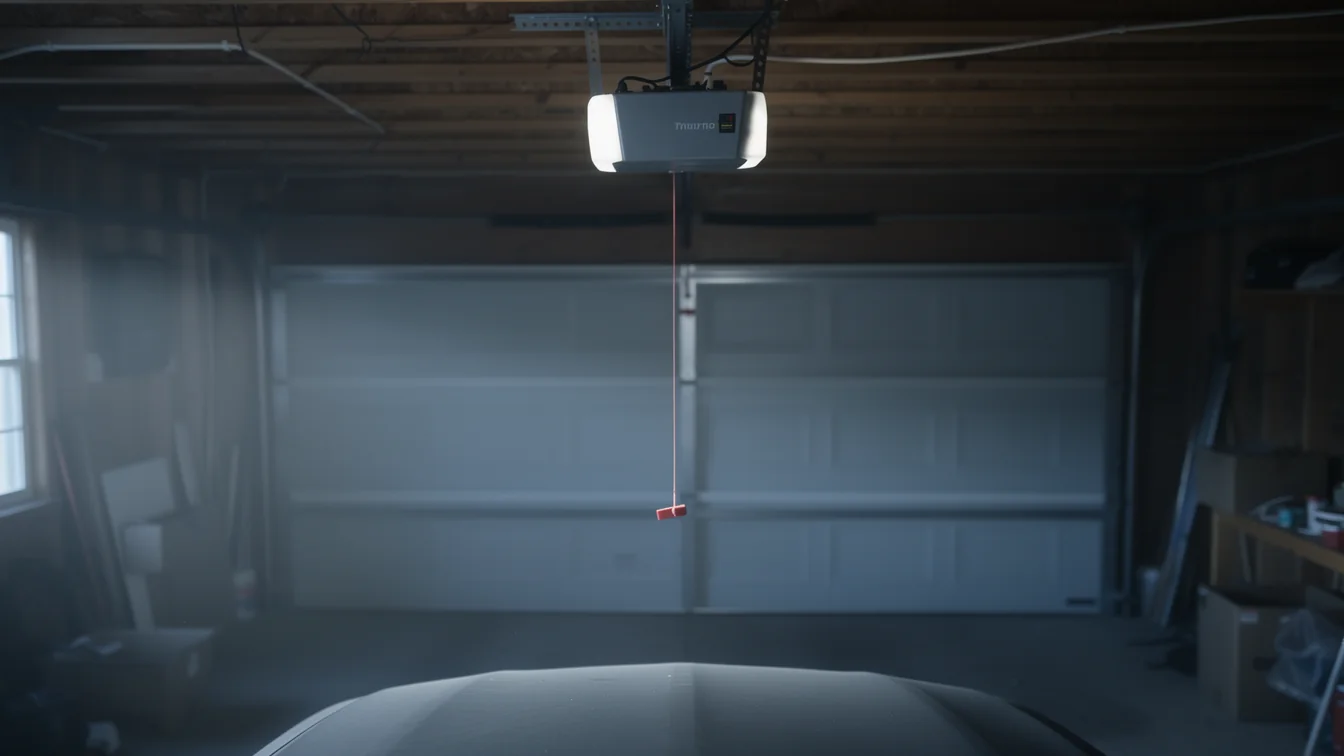
It's usually a red handle hanging from a cord near the opener rail, but on older installs in this area it's sometimes been painted over, trimmed off, or simply forgotten. Test it now, not during an outage. If you can't find it or it doesn't move the door freely, that's worth a call.
Related garage door services in Anderson
More garage door guides
Book garage door service in Anderson
Call now or request a quote - tell us what the door is doing and where you are.