
Anderson, SC · Garage Door Service
What We Actually Check When We Come Out
A real look at what a garage door service call checks in Anderson, SC homes - most built 1960s-70s, median year 1978, in a cold-moderate climate.
- Repairs & new doors
- Springs & openers
- Serving 7 nearby communities
The Common Mistake
Most calls start the same way: the door made a noise, or it stopped halfway, and the homeowner wants that one thing fixed. That's a fair ask, but it's the wrong frame for a house built when most of Anderson's stock went up - somewhere in the 1938 to 2000 range, with the bulk of it from the 1960s and 70s and a median year around 1978. A door that old doesn't have one problem. It has one problem that's visible and two or three that aren't yet.
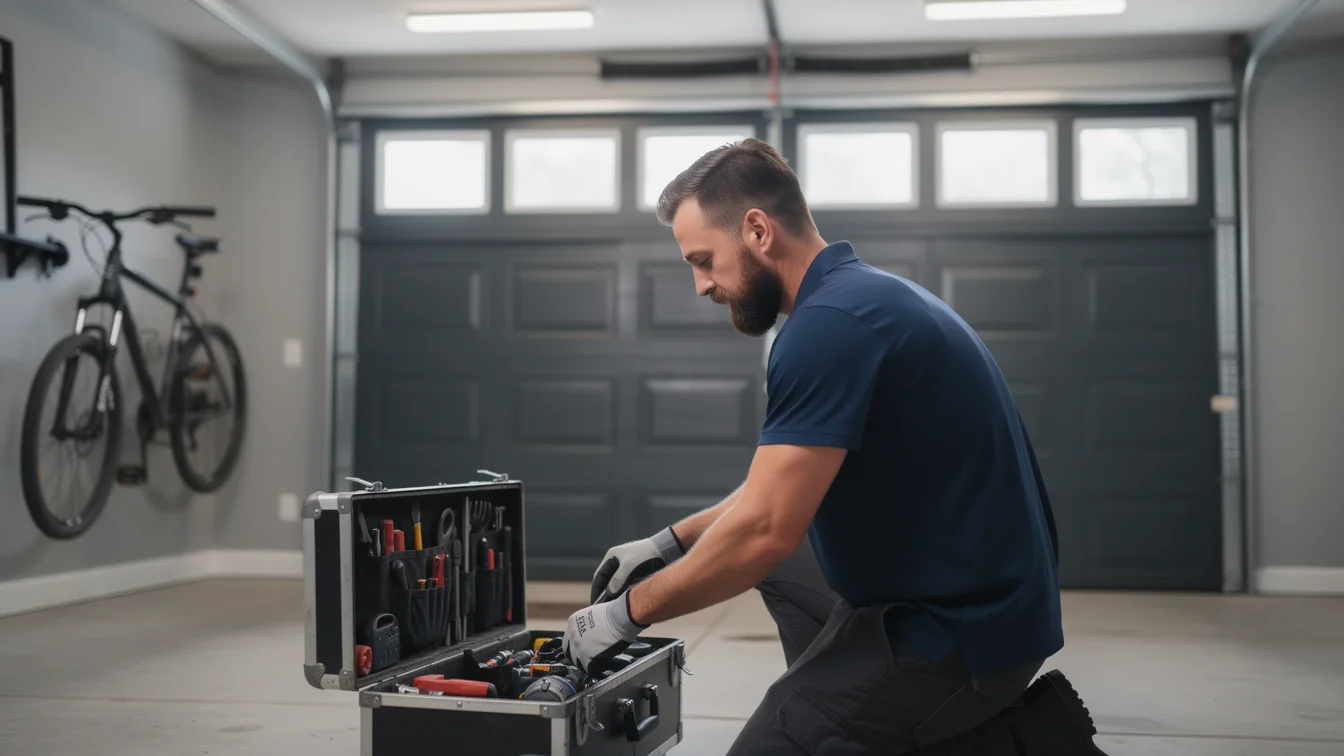
A real service call means pulling the door off auto-reverse and running it by hand, checking cable fray at the drum, checking the spring winding cone for rust pitting, and looking at the track bolts for the kind of wallow you get after decades of a slightly-off door forcing itself through the same worn path. On a house from this era, the opener has usually been replaced at least once but the spring and track hardware often haven't. Treating the call as a single fix means missing the thing that's actually going to strand the car in the driveway next.
We'll tell you straight if what you're hearing is cosmetic or if it's the early stage of something that fails without warning. Springs don't give much notice.
Leaving It Alone
Deferring a repair on a door built to 1960s-70s spec isn't the same gamble as deferring on a five-year-old door. The steel gauge, the drum sizing, the way the cable is routed - a lot of that was standard practice decades ago and isn't what gets installed now. When one part on an older system fails, it's usually because something adjacent already drifted out of spec and put extra load on it. A cable that frays doesn't fray in isolation; it's usually riding a drum that's slightly misaligned because the jamb has settled over fifty-plus years, which is common across this kind of older housing stock.
We see this most in the original torsion setups still running in houses from the 1938-2000 build range that never got touched after the initial install. The spring does its job for years past when it should've been replaced, then goes all at once - usually under tension, usually loud, sometimes with the door still up. Left alone long enough, a worn roller or a frayed cable doesn't stay a fifteen-minute fix. We'd rather catch it at the visit where it's still a part swap, not a day where the door's down and the car's stuck inside.
What the Weather Here Does to It
Anderson sits in a cold-moderate climate band - not the brutal freeze-thaw cycling you get further north, but enough cold swing through winter to matter for a steel torsion spring. Springs lose a little flex with every temperature drop, and a spring that's already near the end of its wind count in a house from the 1960s-70s era doesn't have much margin left when a cold snap hits. That's usually when we get the call: the door that's been sluggish for months finally won't lift at all on the coldest morning of the week.
Humidity swings through the warmer months do their own damage, mostly to hardware that was never galvanized to a modern standard - rollers and hinges on older doors rust from the inside of the bearing out, which you can't see until the roller seizes and starts grinding the track. On a door built to the specs common across this area's older housing, that combination of seasonal cold and humidity cycling is the main reason hardware fails years ahead of when a homeowner expects it to. It's not dramatic weather. It's steady wear that adds up faster here than on a newer door built to tighter tolerances.
The Problem
Put the pieces together and the actual problem isn't any single broken part - it's that a meaningful share of doors across Anderson's older housing stock are running original or near-original hardware against a climate that quietly shortens its life. With a median household income of $56,304 across the service area, a lot of homeowners are making a real call between a $200 spring swap now and a full door replacement later, and that decision changes depending on what else we find on the door during the visit.
We're honest when replacement beats repair: if the track is bent beyond pulling true, or the door itself is an older single-layer panel that's rusted through at the bottom, putting a new spring on it is money spent on a door that's going to need the next thing fixed in a year anyway. We don't push replacement on a door that's got good years left in it. Across the 16,915 owner-occupied houses we could be called to in this area, most of what we find on a service call is maintainable - but only if someone actually looks at the whole system, not just the symptom that made the homeowner pick up the phone.
Frequently asked questions
How do I know if my garage door just needs a repair or a full replacement?
It depends on what's underneath the symptom. If the spring or cable failed but the track, panels, and jamb are sound, a repair makes sense. If the door is an older single-layer panel that's rusted at the bottom or the track is bent, we'll tell you replacement is the better money - we don't repair a door just to have you call again next year.
Why did my door stop working on the coldest morning of the year?
Cold steel loses a little flex, and a torsion spring that's already near the end of its working life in an older house often has no margin left when the temperature drops hard. If the door's been sluggish for a while and then quits on a cold morning, the spring was already most of the way there.
Do you serve areas outside Anderson itself?
Yes - our service area covers the surrounding communities including Northlake, Homeland Park, and Centerville close by, out through Belton, Pendleton, Williamston, Clemson, and the other towns within roughly a 20-mile radius of Anderson.
Related garage door services in Anderson
More garage door guides
Book garage door service in Anderson
Call now or request a quote - tell us what the door is doing and where you are.