
Anderson, SC · Garage Door Service
The Draft You've Stopped Noticing
Anderson's housing stock mostly dates to the 1960s and 70s, and original seals on cold-climate garage doors fail quietly. Here's what that costs you and why.
- Repairs & new doors
- Springs & openers
- Serving 7 nearby communities
The Common Mistake
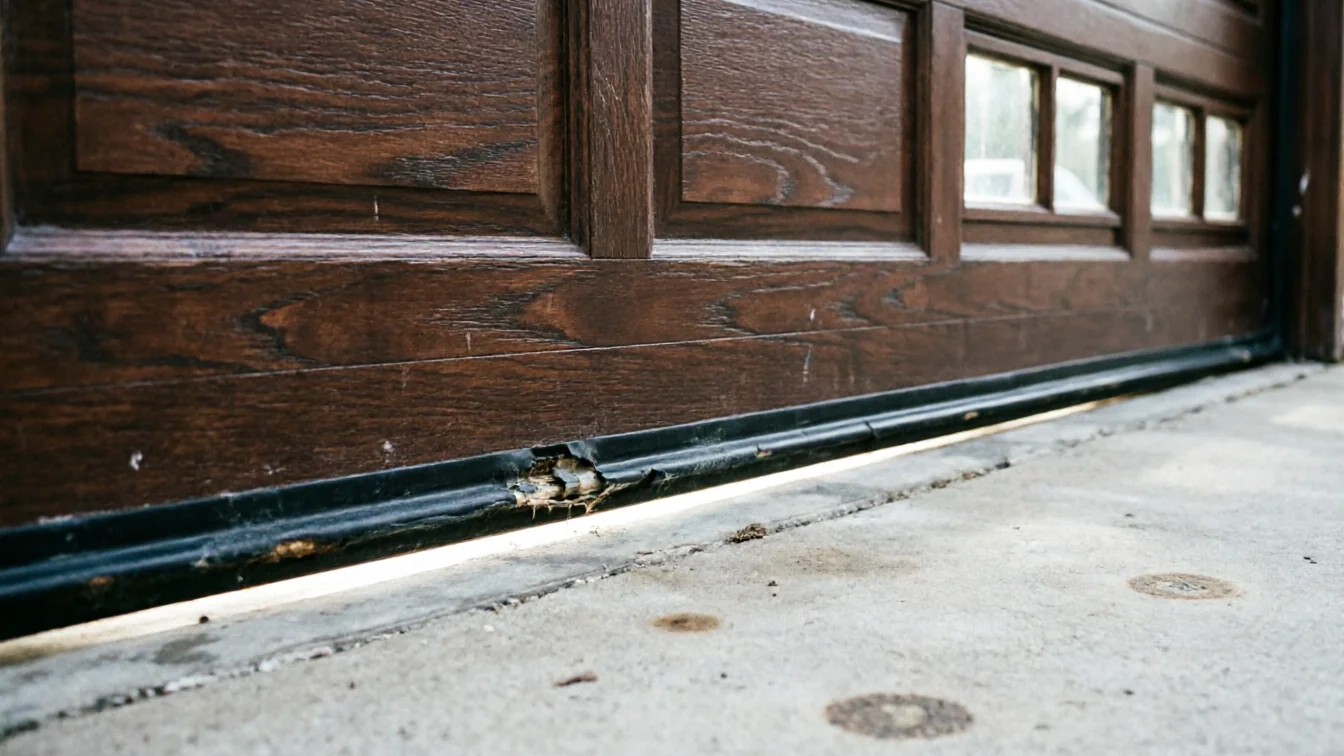
Most homeowners treat the garage door seal like it's permanent. It isn't. Across the 22 named areas that make up this service territory, housing runs from 1938 up through 2000, with the median build year sitting at 1978. That means a lot of these doors have bottom seals and side weather stripping that were installed when the house went up, never replaced, and never really looked at since. The rubber goes stiff, cracks at the corners, and pulls away from the track by a quarter inch - not enough to notice walking past, enough to let air straight through. People assume a garage door either works or it doesn't. A seal failing is neither. The door still opens, closes, looks fine. The mistake is judging the door by whether it moves, not by whether it's actually sealed. On a 1970s build with the original weather stripping still in place, that's usually the gap nobody's checked.
Leaving It Alone
A cracked seal on a mild-climate house might cost you a slightly colder garage and not much else. That's not the deal here. Anderson sits in a cold-moderate climate band, which means the garage door seal isn't decorative trim - it's doing real work every winter, keeping cold air and moisture out of a space that, in a lot of these older houses, backs straight onto a laundry room or a finished wall. Leave a bad seal alone through one winter and you're not just losing heat. Moisture gets pulled in with the draft, and on a slab or stored wood framing from a house built before 1980, that moisture sits. It doesn't dry out fast in a space that's sealed on three sides and leaking on the fourth. The honest version: ignoring it won't collapse your door. It just turns a five-minute fix into a slower, quieter problem that shows up as rot or rust on hardware you can't see from the driveway.
What the Weather Here Does to It
Cold-moderate means swings, not a flat cold snap that sets in and stays. That's the part that wears seals out faster than people expect. The rubber contracts hard on a cold night and then has to flex back when temperatures climb the next afternoon - and it does that over and over across a winter, not once. On a door with original weather stripping from the 1960s or 70s, that material has gone through decades of those cycles and it shows: brittle spots, seams that have split rather than just worn thin. The track hardware takes a version of the same beating. Metal contracts in the cold, and a track that's a sixteenth of an inch out of alignment in July can bind in January. None of this is dramatic. It's slow, it's seasonal, and it's exactly the kind of thing that gets blamed on
placeholder
placeholder
Related garage door services in Anderson
More garage door guides
Book garage door service in Anderson
Call now or request a quote - tell us what the door is doing and where you are.