
Anderson, SC · Garage Door Service
What Anderson's Older Housing Stock Means for Your Spring
Anderson, SC homes built between 1938 and 1978 often have original torsion springs that snap without warning in cold weather. Here's what to watch for.
- Repairs & new doors
- Springs & openers
- Serving 7 nearby communities
The Common Mistake
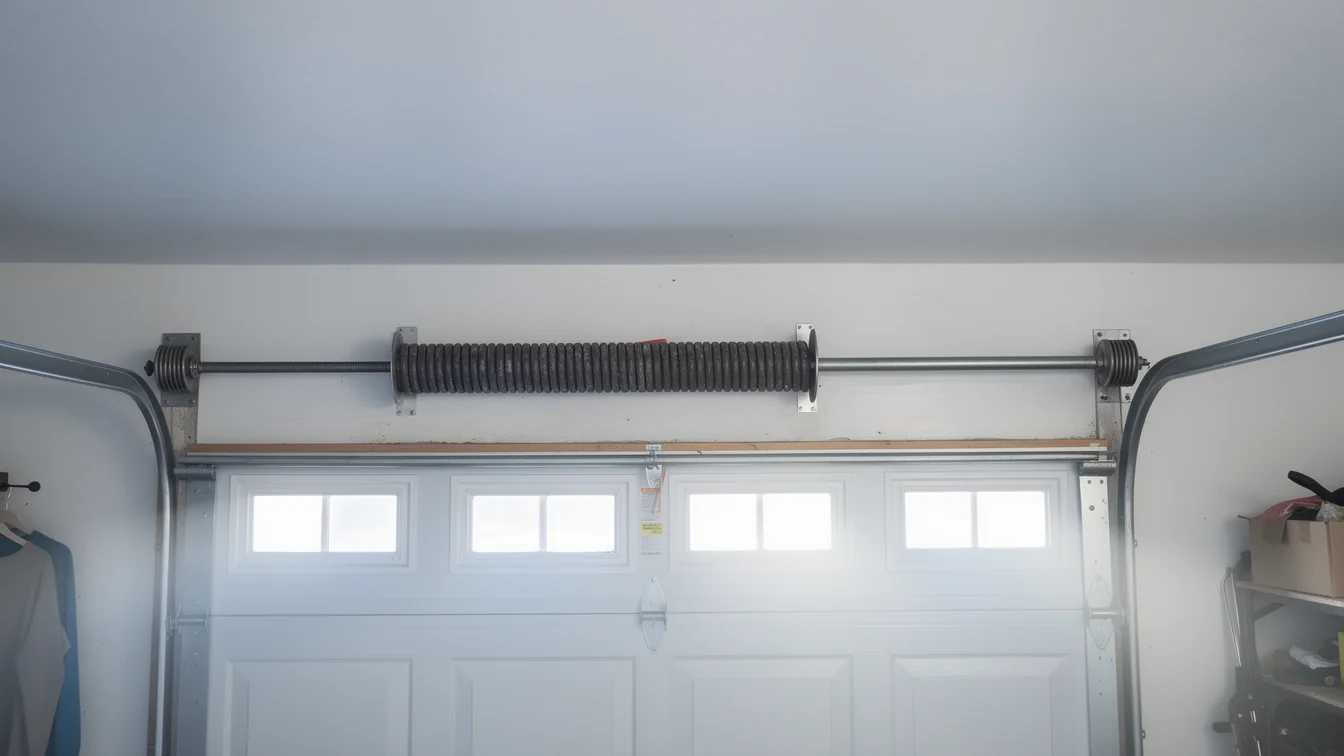
The mistake we see most is treating a garage door spring like it's new just because the house doesn't feel old. It doesn't work that way here. Most houses in and around Anderson went up between 1938 and 2000, with the median landing around 1978, and across the 22 named areas we cover - Homeland Park, Centerville, Northlake, and the rest - the bulk of that stock dates to the 1960s and '70s. That means a lot of torsion springs on Anderson doors are 40 to 60 years into a part that's rated for somewhere around 10,000 cycles, not 60 years.
Homeowners assume the spring is fine because the door still opens. It opens right up until the day it doesn't, and that day is almost always a cold morning. A spring doesn't wear down gradually and give you warning creaks for a month first. It holds tension until it doesn't, and on a door this old, the failure point has usually already been reached - it's just waiting for the cold to finish the job. Waiting for a sign before you call is the wrong strategy for a spring this age.
Leaving It Alone
Leaving an old spring alone doesn't cost you anything - until the morning it does, and by then you've got a door that won't open, sitting over a car you need to get to work. On a two-spring system, it's common for one to go and the other to follow within weeks, because they've been carrying the same load for the same decades.
There's also a real safety piece here that has nothing to do with age of the house and everything to do with physics. A broken torsion spring under tension is dangerous to touch, and a door with one spring gone can drop fast and hard if someone tries to force it open by hand. We're not saying this to scare you into a service call you don't need. We're saying it because on a door built in the era most Anderson houses were built, the spring has had decades to get to exactly this point, and ignoring it doesn't make the physics go away.
If your door is original to a 1960s or '70s build, the hardware around the spring - the end bearing plates, the center bracket - is often original too, and that adds its own wear on top of the spring's.
What the Weather Here Does to It
Anderson sits in a cold-moderate climate band, which doesn't mean brutal winters, but it means real swings - cold enough that steel contracts and the grease inside an old spring thickens and stops doing its job. A spring that's been fine all October can seize up stiff on the first hard cold morning of the year, and that stiffness is what finally snaps a spring that was already near the end of its life.
The cold doesn't create the weakness. It exposes it. A spring with plenty of life left handles a cold snap without issue. A spring that's already fatigued from decades of cycles - which describes a lot of the springs on houses built when most of Anderson's housing went up - doesn't have the give left to handle the extra load cold puts on the metal. That's why the call volume on broken springs tracks the first cold stretch of the year almost every year, not because the cold is severe, but because it's the final push on hardware that was already worn down.
The Problem
Here's the actual problem: across the roughly 16,915 owner-occupied houses in this service area, most sharing that same 1960s-to-70s construction window, a huge number of springs are at or past end of life at the same time, because they were installed at the same time. That's not a coincidence - it's the housing stock.
With a median household income of $56,304 across the area, a full replacement - new springs, updated hardware, sometimes a new opener to match - is a real expense for most households here, not a casual upgrade. That's worth saying plainly: we'd rather tell you a repair will hold for a few more years than push a replacement you don't need yet. The honest limitation is this - some older torsion spring sizes from that era aren't something every shop keeps on the truck, and matching the exact wire size and wind on an original 1970s door can take longer than a same-day fix on newer hardware. We'd rather tell you that up front than surprise you with it.
Frequently asked questions
How do I know if my spring is original to the house?
If your house was built in the 1960s or '70s - which covers most of Anderson's housing stock - and the spring has never been replaced, it's likely original. Signs include visible rust, gaps in the coil, or a door that's gotten noticeably heavier to lift by hand over the past year or two.
Why do springs seem to break more in cold weather here?
Anderson's cold-moderate climate means steel springs contract and old grease thickens during cold stretches. That added stiffness is usually the final push on a spring that was already worn down from decades of cycles, not the sole cause of the break.
Is it cheaper to fix or replace an old spring system?
It depends on the door's age and what else is worn. On a door from the 1960s-70s era, we often find the bearing plates and center bracket are original too, which can tip the math toward full replacement rather than a spring-only repair. We'll tell you honestly which side your door falls on.
Do you stock every spring size on the truck?
No. Some older torsion spring sizes from houses built decades ago aren't common stock, and getting the exact wire gauge and wind for an original door can take longer than a repair on newer hardware. We'd rather say that upfront than promise a same-day fix we can't guarantee.
Related garage door services in Anderson
More garage door guides
Book garage door service in Anderson
Call now or request a quote - tell us what the door is doing and where you are.