
Anderson, SC · Garage Door Service
Why a Garage Door Goes Off Track in Anderson
Anderson's 1960s-70s housing stock and cold-moderate climate swings push tracks out of alignment. Here's how it happens and what it costs to ignore it.
- Repairs & new doors
- Springs & openers
- Serving 7 nearby communities
The Common Mistake
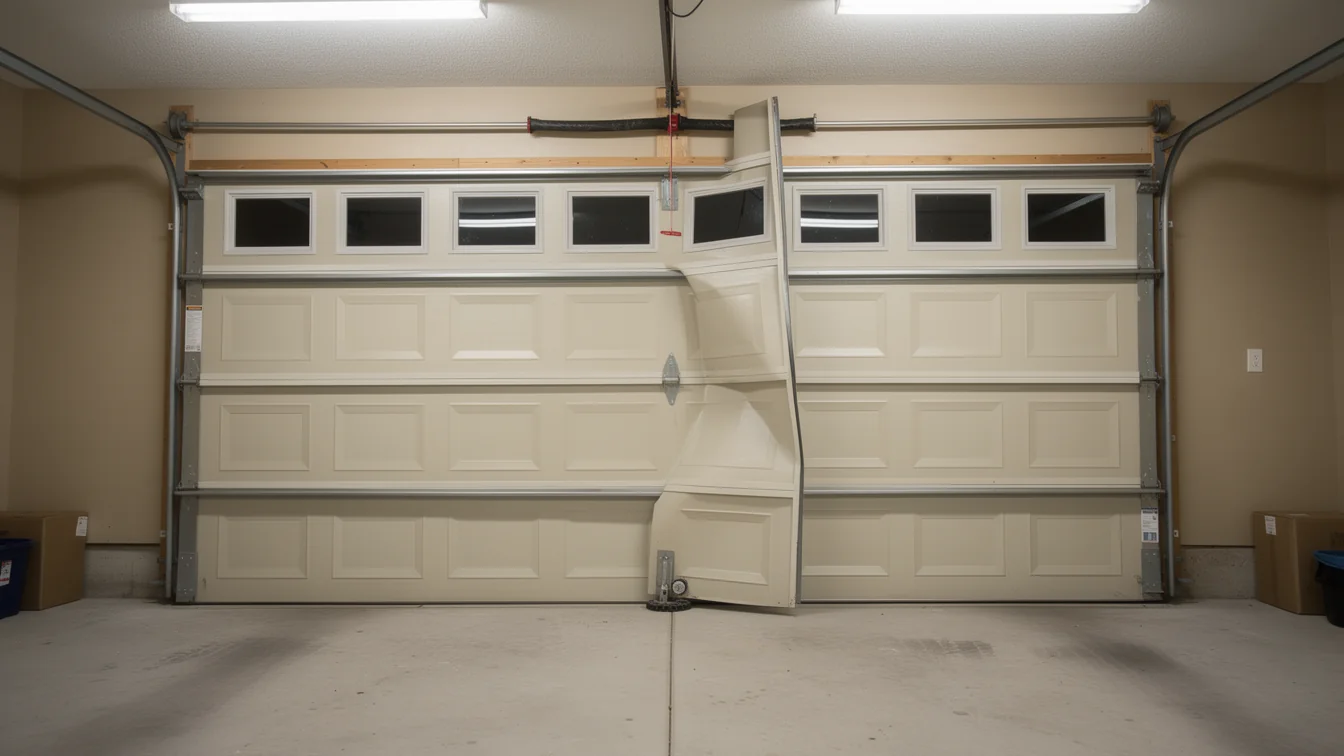
The mistake we see most in Anderson is treating a door that drags or binds as a lubrication problem. Someone sprays the track, the door runs smooth for a week, and the real issue - a bent track or a roller that's worn past spec - keeps getting worse underneath. A lot of the housing stock across this service area went up between 1938 and 2000, with most of it concentrated in the 1960s and 70s across the 22 neighborhoods we work in. Doors from that era, and even the replacements installed on those original openings, were hung on track brackets anchored into framing that's had fifty-plus years to shift. A track that was plumb when it went in isn't necessarily plumb now. Spraying lubricant on a track that's an eighth of an inch out of alignment doesn't fix the alignment - it just buys you a few more cycles before a roller jumps the rail entirely. If your door has started making a different sound on one side, or the bottom panel closes crooked, that's not a lube problem. That's a track that's already moved.
Leaving It Alone
A door that's slightly off track doesn't fail all at once. It fails one cycle at a time. Each time the opener forces a misaligned door up and down, it puts uneven load on the cables and the spring system, and on hardware that's often original to a house built decades ago, that uneven load finds the weakest point fast. In homes across Anderson's older stock, that weak point is usually a track bracket with stripped anchors or a roller stem worn thin from forty years of use. Left alone, a door going off track doesn't stay a minor noise - it becomes a door that jumps the track mid-cycle, which can bend the track itself or crack a panel on the way down. At that point you're not adjusting hardware, you're replacing it. We'll say plainly: if the track is already bent, realigning it is a short-term fix. A bent track that's been forced back into shape once tends to go again, and at that point replacing the section costs less in the long run than a second service call.
What the Weather Here Does to It
Anderson sits in a cold-moderate climate band, which means the ground and the framing around a garage opening go through real freeze-thaw movement, even if it's nothing like the deep freeze states see. That seasonal shift is enough to move a track bracket a fraction of an inch at a time, especially on houses built before modern anchoring standards were common - a real factor given how much of this area's housing dates to 1938 through the 1970s. Humidity swings matter too. Wood jambs that shrink and swell with the season can pull a track bracket just enough that the door starts to bind on one side in winter and runs fine again by summer, only for the problem to come back worse the next year. This isn't a one-time event you can point to. It's slow, cumulative movement, which is exactly why so many Anderson homeowners say the door was 'fine a few months ago' right before it jumps the track.
The Problem
The real problem is that a door going off track rarely announces itself with one clear symptom. It's a slightly louder roller, a door that closes a hair out of square, a track bracket with one screw backed out a quarter turn. On its own none of that looks urgent. Stacked together, on a door that's been running on the same hardware since the house was built sometime in that 1938-2000 window, it adds up to a door that's one bad cycle away from coming off the rail with the opener still pulling. We check track alignment, bracket anchoring, and roller condition together, because fixing one without the others just moves the failure point somewhere else on the same door. If the track has already bent from a prior jump, we'll tell you straight that replacing that section is the right call, not a patch.
Frequently asked questions
Why did my garage door suddenly start running crooked?
Usually it's not sudden - it's been building. A track bracket loosens a little at a time, especially in older Anderson homes where framing has shifted over decades. Once it passes a certain point, the door starts visibly dragging or closing out of square. Catching it before the roller jumps the rail is a lot cheaper than fixing it after.
Can I fix a bent track myself?
You can sometimes bend a track back close to straight, but it rarely holds for good. Once steel track has deformed once, it's weaker at that point and tends to go again under normal door weight. For most Anderson homes, especially on original hardware from the 60s and 70s, replacing the bent section is the more durable fix.
Does the weather here actually affect garage door tracks?
Yes, though it's gradual. Anderson's cold-moderate climate brings enough seasonal temperature and humidity swing to shift wood framing and track anchors slowly over years. It's not storm damage - it's the kind of slow movement that shows up as a door that binds a little more each winter.
Related garage door services in Anderson
More garage door guides
Book garage door service in Anderson
Call now or request a quote - tell us what the door is doing and where you are.